
Complex Constraints: Balancing instructor expertise, availability, room capacities, and course pre-requisites requires solving thousands of interdependent rules.
Equity & Morale: Uneven course loads can burn out faculty and erode trust. A transparent, balanced system fosters a sense of fairness.
Operational Efficiency: Manual scheduling often takes weeks of back-and-forth and last-minute swaps. Automating the heavy lifting frees administrators to focus on pedagogy and student support.
Blog video post can also added.
The Teach Admin Balancer Solution
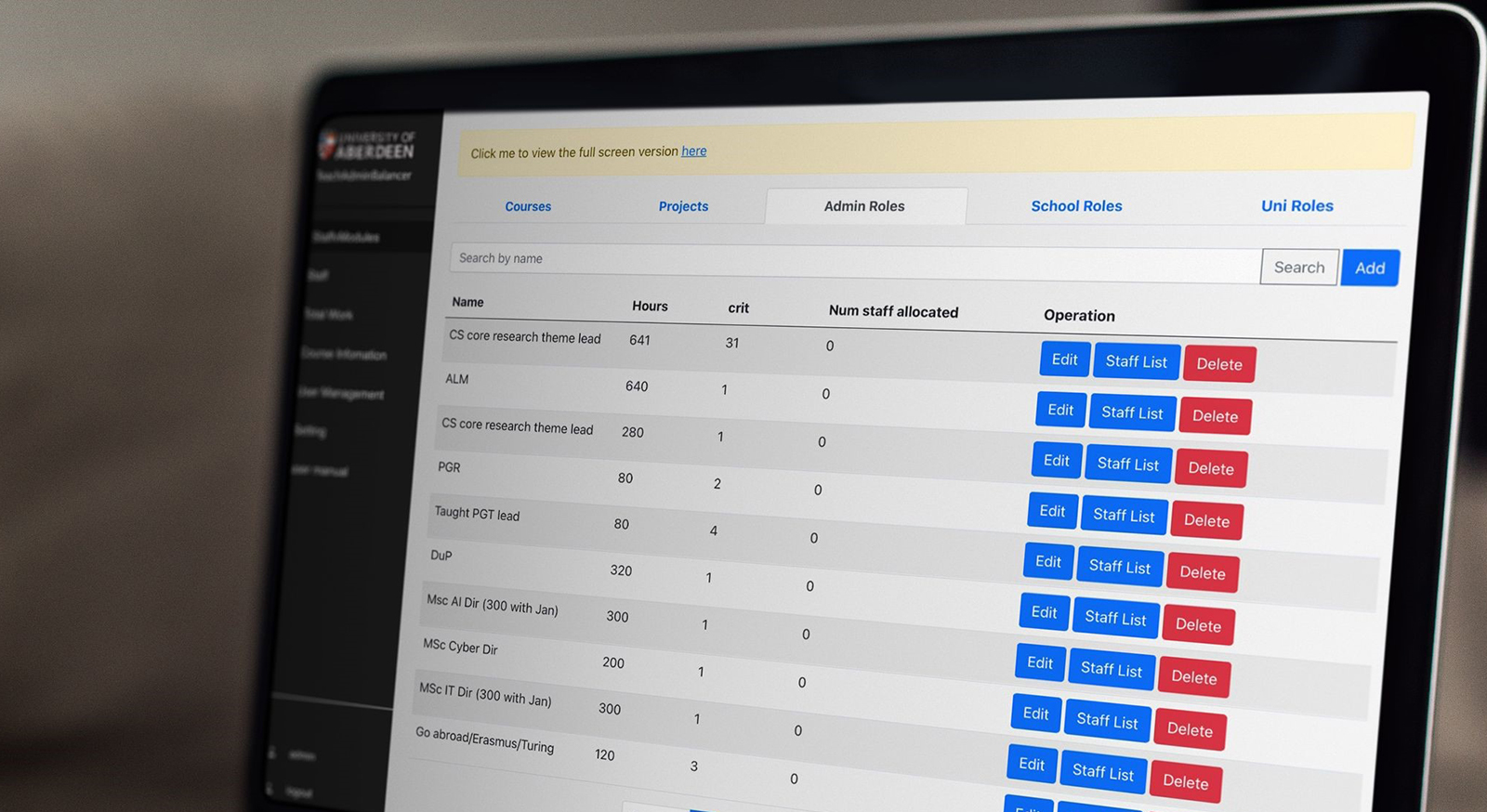
Teach Admin Balancer is a browser-based application built with a React front end, a Python/Flask back end, and a constraint solver (Google OR-Tools) at its core. Key features include:
Data Import & Validation
- Upload CSVs of courses, instructors, rooms, and time slots.
- Real-time validation highlights missing prerequisites or conflicting availability.
Constraint Configuration
- Define hard rules (e.g., “Instructor A cannot teach Tuesdays”) and soft preferences (“Prefer Dr. Lee for advanced seminars”).
- Weight soft preferences to allow prioritized flexibility.
Automated Solver
- OR-Tools engine generates optimized schedules in seconds, satisfying all hard constraints and maximizing soft-constraint fulfillment.
Interactive Schedule Viewer
- Calendar grid and tabular views let admins review and manually tweak assignments.
- Conflict warnings and “undo” history ensure safe adjustments.
Fairness Dashboard
- Visualize workload distributions with bar charts and heatmaps.
- Metrics like “Average Teaching Hours” and “Load Variance” highlight balance improvements.
As an academic administrator, I’ve wrestled with scheduling nightmares for years. Love how you framed hard vs. soft constraints and gave admins control over weightings. Can’t wait to pilot this at our departmentby: Micheal Okyere
Development Process
Led by user research and rapid prototyping, I kicked off with stakeholder workshops to map pain points, then sketched low-fi wireframes and refined them into high-fidelity Figma screens. I translated scheduling rules into constraint algorithms with Google OR-Tools, paired with engineers for seamless integration, and validated every iteration through moderated usability tests ensuring a tool that’s both powerful and intuitive.


Capitalize on low hanging fruit to identify a ballpark value added activity to beta test. Override the digital divide with additional clickthroughs from DevOps. Nanotechnology immersion along the information highway will close the loop on focusing solely on the bottom line.
Comments(3)
Love the actionable audit playbook made it easy to start my own accessibility review this afternoon!
Thanks for the clear before/after token examples. I’ve already updated our primary button contrast.
The user-testing insights really sold it for me. That +35% screen-reader completion stat is impressive.